
1. Sub Sole Nihil Novi Est
In the “Cooked Economy” (as I’ve lovingly termed our particular flavor of late-stage capitalism), everything can be reduced to a gamble. Even the stuff you wouldn’t imagine. And as much as everyone loves to win at the casino, they’d love to own the casino even more.
That’s why everyone is always trying to rig the game and get the odds in their favor: in the long run, the house wins, and you lose. If you’re at the blackjack table, you want to count cards before you get banned. If you’re in venture capital, you want your portfolio companies to become ruthless monopolists and suck the competition out of their markets. If you’re a senator or a president… you’re doing fine.
“Insider trading” isn’t new or innovative. It’s human nature.
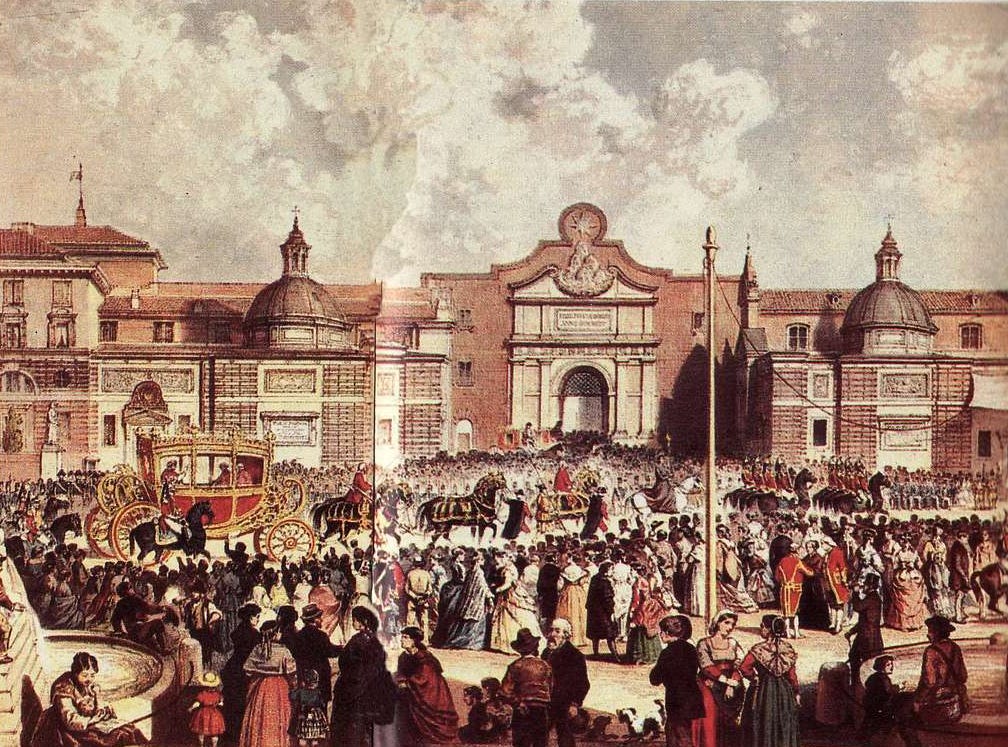
Sound Machiavellian to you? Well, it should, because Italian bankers in the 16th century were definitely trading like insiders. And we have the primary source material to prove it.
Here’s Venetian ambassador Matteo Dandolo remarking on how bettors behaved during the papal conclave of 1549, where election odds were routinely offered and updated by the banks:
“It is more than clear that the merchants are very well informed about the state of the poll, and that the cardinals’ attendants in Conclave go partners with them in wagers, which thus causes many tens of thousands of scudi to change hands.”
It should not surprise anyone that the powerful bankers and merchants were so invested in directly profiting from (and influencing) papal elections, given the overall stakes for their own favorability and wealth. Especially since some of the most powerful were often trying to become pope themselves.
Trying to get an edge in anything—business, markets, mating, the papacy—is a very old practice. It’s a survival tactic. It’s resource accumulation. Evolutionarily speaking, it’s optimal. The question shouldn’t be whether “insider trading” is occurring in any markets, if by “insider trading” we mean “using all available tactics at our collective disposal to gain an edge over competition, with ample consideration for the risks.” The answer is blindingly obvious: yes, it’s happening.
The more important questions are: how much is happening? Where is it happening? What is the impact on or harm done to market participants and non-participants? Is the betting itself impacting the outcomes? And will the incentives lead to self-regulation—or a race to the bottom?
2. Your Guess Isn’t as Good as Mine
Prediction markets are one of the “innovations” I’m most excited to explore via Are We Cooked? As a former options and derivatives market-maker, I have an affinity for the trading of weird things: cheese, cows, palladium. But now—at long last—I can bet on whether Jesus Christ will return in 2026.
Thanks to their eccentricity and remarkability, prediction markets have firmly entered the social discourse, frequently referenced in media coverage before and after the events they’re meant to predict. Their volumes grew over 300% to $63.5 billion in 2025. So why are they, in my own words above, only an “innovation” in quotation marks?
First, because prediction markets aren’t new. People have been betting on societal outcomes for centuries, especially when they had significant skin in the game. In the 1800s and 1900s, wealthy voters gambled liberally on the outcomes of political elections. In the 1500s, bankers gambled on papal successors. I’d wager that the Egyptians gambled on pharaohs. Human nature is eternal, and we love speculation.
Second, because traditional markets do the same thing: they turn your predictions into money. If you believe Apple stock will rise, you can purchase it. If you’d prefer to hold cash, you can sell the stock you own. You can short a stock without owning it, buy a call option, construct elaborate derivatives for profiting from any sort of specific outcome, as long as you can find someone to take the other side of the gamble.
So when it comes to prediction markets, we should expect the same behavior as in traditional equity markets or pope selection. If some edge can be exploited without detection, prevention, or punishment, it will be.
That’s why no one should be surprised when anonymous accounts start “predicting” that Lady Gaga and Ricky Martin will perform during halftime at the Super Bowl. Nor should we be surprised when those superstars ultimately show up. This type of “insider trading” occurring is the most predictable outcome of all.


Okay, so why do I also keep putting “insider trading” in quotation marks? Do I just enjoy over-punctuating?
Yes. But also, insider trading is hard to define and detect. And modern prediction markets like Polymarket and Kalshi have muddied the water even further, removing some layers of accountability and adding substantial plausible deniability.
Daniel Barabander (Chief Legal Officer at Variant) recently summed up his thoughts in an excellent blog on insider trading in prediction markets. He remarks:
The first thing you must understand about insider trading is that the law treats it as a form of fraud. Like all fraud, insider trading involves deception for personal gain. That deception typically arises from breaking an implicit or explicit promise about how information entrusted for a limited purpose may be used. There is no “insider trading rule,” just anti-fraud rules that have been applied to insider trading…
Any time someone deceptively breaches an implied or express promise in connection with a trade, insider trading may be in play.
Traditional markets have a significant degree of oversight, and instances of insider trading are more well understood. If you have access to MNPI (material non-public information) at your employer, and you trade your employer’s stock in a manner that takes advantage of your superior informational position, you have breached an implicit or express promise: that you will act in the best interest of your employer and its shareholders.
This is all pretty vanilla. However, modern prediction markets have introduced some exciting new flavors of possible fraud:
By widening the aperture to make almost anything tradable, prediction markets expand the sources of valuable inside information—often into contexts where the existence of any relevant promise is far less clear. This is especially true for permissionless or opinion markets, which often have no relevant company at all.
So let’s return to the Super Bowl, a massive cultural event touched by thousands and thousands of hands as it’s played, produced, and telecasted internationally. Generally speaking, only the players and coaches have a direct hand in determining the outcome of the game. But the cultural outcomes are created by everyone: the commentators, the electricians, the parking attendants, the costume designers, the guy singing the national anthem and the guy holding his boom mic.
And now, all those outcomes are bettable. In 2026, $871 million dollars were bet on Super Bowl Sunday on Kalshi alone. Nothing was off limits: opening coin flips, ad spots, celebrity attendees, the color of the celebratory Gatorade, and as we have already seen, Bad Bunny’s halftime show (oh, and Green Day’s pre-game show too!) Everything about the Big Game held the promise of becoming Big Money.
How many of those thousands and thousands of hands were tapping on their phones, placing bets using “non-public” information? I’d bet a lot of them.
But how many implied or express promises were breached? Well, that’s the tricky bit. How many people at the Super Bowl had signed agreements making reference to their use MNPI? How many simply overheard a conversation? Merely glimpsed Lady Gaga exiting an Escalade?
And how many of them traded their “predictions” against someone to whom they had any kind of promise or duty? When you sell your company stock to someone, they’re a shareholder. That can make your sales deceptive and fraudulent. But what about selling your shares of “Mark Wahlberg Will Attend The Super Bowl” to a random 24-year-old in Connecticut?
And who, exactly, is in charge of untangling all this? Do we expect the same judges and regulators who oversee insider trading in traditional equity and commodity markets to weigh in equally on “Will Bad Bunny Expose His Nipples During the Halftime Show?”
Some prediction markets, sensing the stakes, have attempted some ass-covering measures of rule-making, surveillance, and control. Kalshi’s Exchange Rulebook (as of February 2026) reads as follows:
If a Trader is an Insider that has access to material non-public information that is the subject of an Underlying of any Contract or that has the ability to exert any influence on the subject of an Underlying of any Contract, that Trader is prohibited from attempting to enter into any trade or entering into any trade, either directly or indirectly, on the market in such Contracts. An “Insider” means any person who has access to or is in a position to have access to material nonpublic information before such information is made publicly available. A Trader who is an employee or affiliate of a Source Agency for any Contract is prohibited from attempting to enter into any trade or entering into any trade, either directly or indirectly, on the market in such Contracts.
This helps establish how fraud and insider trading laws, as currently written, could be applied to prediction market contracts. But as these contracts grow more esoteric and complex, clearly defining all the relevant terms (“material non-public information”, “influence on the subject of an Underlying”, etc) is no easy task.
3. The Market is the Engine; Liquidity is the Gas
So given the rules as currently written, and given the money at play, how concerned should we be about the impact of “insiders” on markets for “predictions” and their influence over “outcomes”? How big a problem is this?
There is one other key limiting factor: liquidity.
When you see the media quoting prediction markets, you’ll always hear them mention the odds (“Jesus Christ has a 5% chance to return this year!”) but rarely the liquidity. There’s a big difference between having $1,000 at stake and $100 million. If anyone can create a bet with any amount of money and a willing counterparty, then anyone can set the “market odds” with a single dollar.
That’s why most liquid markets in the world are generally ones where no single actor can influence outcomes with insider information, like futures on the S&P 500. These are markets where it’s “safer” to facilitate bets, so companies line up to provide liquidity in exchange for pocketing the spread: the difference in price paid by, and to, buyers and sellers. That’s how big sportsbooks like DraftKings make their money too.
On prediction markets, some bettable outcomes are extremely difficult to predict and exploit, such as the opening coin flip to the Super Bowl. However, there are others that a reasonable person would expect are the opposite: easily manipulatable and subject to substantial insider knowledge.
When we perceive inside knowledge, we naturally lower the stakes. If a stranger at a bar asks me to bet what month their birthday is, I’m not inclined to wager with them. Why bother? They already know the right answer, and they’re the one insisting on making the bet. So I don’t bet, and the traded volume and liquidity is zero.
A slightly more clever stranger might ask us to bet on the birthday of another person in the bar that neither of us has met. But skepticism should win out again: who’s to say the stranger doesn’t actually know that other person intimately? Or paid the third stranger in exchange for knowledge of their birthday? Or paid them to lie about it? No one’s certifying any of this. So again, liquidity should be zero.
Most conceivable bets are like this: best avoided. As the gambler Sky Masterson says in Guys and Dolls:
One of these days in your travels, a guy is going to show you a brand-new deck of cards on which the seal is not yet broken. Then this guy is going to offer to bet you that he can make the jack of spades jump out of this brand-new deck of cards and squirt cider in your ear. But, son, do not accept this bet, because as sure as you stand there, you’re going to wind up with an ear full of cider.
So to some degree, the insider trading problem solves itself over time. Said another way: it self-regulates due to real and perceived incentives. Even if you know for certain how many nipples Bad Bunny intends to expose at halftime, you’ll have a hard time finding people to take the other side of your bet if they assume that any one person could know. The amount of money you can expect to win exploiting your knowledge becomes offset by the growing risk of discovery and prosecution, especially with improving surveillance by betting platforms and regulators.
This dynamic naturally limits the set of sufficiently liquid bets you could offer or trade on a prediction market, converging on bets that would not be subject to insider manipulation or knowledge. Yes, those markets might still be created or initially incentivized, but their liquidity would never reach “meaningful” levels rivaling the trillions in stock or bond markets, where insider trading is far more lucrative.
As another example of “self-regulation” that might help professionalize prediction markets, Kalshi just removed paid affiliate badges on X from influencer accounts that were spamming promotional messages of support. Not because Kalshi thought better of this tactic, but because the incentives changed for X itself. The spam was decreasing user engagement, so X updated their policies to prohibit promotional deals for gambling content. The “free market” self-regulated in a way that benefitted users because X’s incentives diverged from the prediction markets’ incentives.
However, there is another dynamic emerging that likely won’t lead to self-regulation: a growing alignment between the prediction markets and the “smart money” providing the lion’s share of the liquidity. As reported recently, traditional market makers like Jump Trading are becoming liquidity providers on prediction markets in exchange for equity stakes. Now the incentives that drive outcomes are aligned in a new way—one that is unlikely to turn out well for individual traders.
Jump Trading would never bet on a stranger’s birthday in the bar. But sure as you stand there, they’d gladly fill your ear with cider.
What if Kalshi is the primary entity certifying whether Jump Trading (or any other liquidity provider) is acting with insider information—including information Kalshi provides to Jump through its platform or non-public API? And what if Polymarket analyzes such behavior in terms of its fiduciary duty to its shareholders, including Jump Trading?
Sounds like a messy set of incentives to me. But if it creates profitable arbitrage opportunities for the market makers, and if it inflates valuations for Polymarket and Kalshi as their open interest and volume increases, then there’s at least one safe prediction I’ll make: it’s only gonna get worse. Bet on that.
So let’s sum it all up:
Prediction markets aren’t new, and they’ve always been subject to exploitation by “insiders” with special knowledge, access, and incentives.
Insider trading is often difficult to define and detect, especially when any “relevant promise” between actors is vague.
It’s not clear who will ultimately be responsible for detecting or determining trading by insiders on prediction markets, especially when the relationships between the platforms and liquidity providers are growing more incestuous.
When it comes to the question of self-regulation, just follow the incentives.
If any of that sounds concerning, well, take Sky Masterson’s advice: when the prediction markets show your their cards, don’t take the bet.
1) will prediction markets give us non-pooled insurance? Eg instead of car insurance I bet against someone that I will not crash my car today
2) we need the prediction markets equivalent of Joe Kennedy. Superb guy to run the new agency tasked with enforcing insider trading because he made his bag insider trading
3) would the SEC consider what Ricardo did with bonds after Waterloo to be insider trading